ibn sultan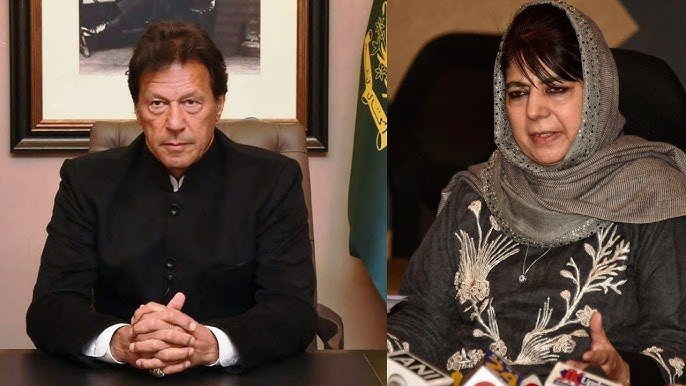
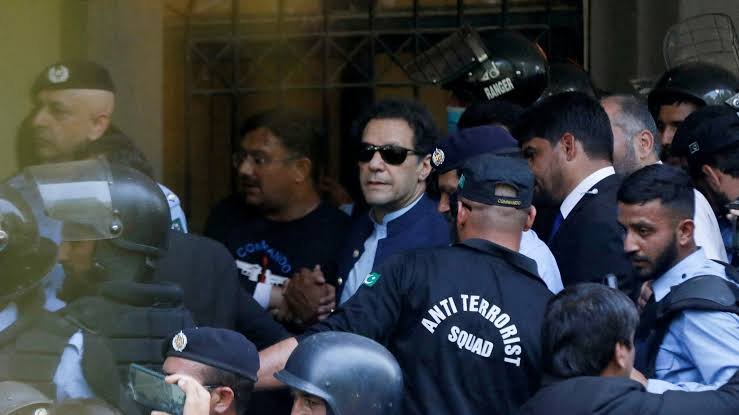
Srinagar, August 25: PDP president and former Jammu and Kashmir chief minister Mehbooba Mufti has criticised the treatment of former Pakistan Prime Minister Imran Khan, saying his recent hospital transfer highlights the deep political and institutional crisis in Pakistan.
In an opinion article, Mehbooba said Imran Khan had been returned to Adiala Jail after being taken out for medical treatment, despite the Pakistan Supreme Court ordering his transfer to Shifa Hospital for medical assessment and treatment on August 18. Instead, he was examined at the Pakistan Institute of Medical Sciences and, after being declared medically fit, sent back to jail.
She said the episode raises serious questions about the strength of Pakistan’s democratic institutions, particularly when orders of the country’s highest court appear vulnerable to executive and military influence.
Mehbooba recalled meeting Imran Khan in London in 1994 along with her father. She said his passion and determination to bring positive change to Pakistan had deeply impressed her father.
However, she said that after becoming prime minister, Imran Khan’s government also became part of the same political culture in which political opponents were pursued through state institutions. She specifically referred to the imprisonment and prosecution of Pakistan Muslim League-Nawaz leaders, including Nawaz Sharif and Maryam Nawaz, during the Pakistan Tehreek-e-Insaf government.
According to Mehbooba, Pakistan’s crisis is therefore not limited to Imran Khan, Nawaz Sharif or any individual political party, but is rooted in the country’s political system and the long-standing imbalance between civilian authority and military power.
She traced Pakistan’s political instability to decades of military intervention, beginning with General Ayub Khan’s 1958 coup and followed by periods of military rule under Yahya Khan, Zia-ul-Haq and Pervez Musharraf. She also described the execution of elected Prime Minister Zulfikar Ali Bhutto during Zia’s rule as one of Pakistan’s darkest chapters.
Mehbooba contrasted Pakistan’s political experience with India, saying India’s constitutional institutions ensured that the armed forces remained subordinate to elected civilian governments despite wars, political crises, the Emergency, assassinations and changes of government.
She argued that Pakistan has developed a “vicious cycle” in which civilian politicians seek the support of the military establishment to gain power and later use state institutions against their opponents. When relations with the military deteriorate, the same system is then turned against those politicians.
Mehbooba said Imran Khan was also part of this cycle, noting that his rise to power in 2018 was widely seen as having benefited from military backing. His relationship with the establishment later deteriorated, leading to his removal from office in April 2022 and his subsequent imprisonment.
She said military dominance has been sustained not only by the military but also by civilian politicians who seek its intervention when it suits their political interests.
According to her, Pakistan can break this cycle only when political parties choose to accept electoral defeat rather than seek military intervention to secure power.
Mehbooba said Pakistan has many elements necessary for a functioning democracy, including politically conscious citizens, active political parties, civil society, a strong legal community and public participation in elections. However, she warned that the country cannot credibly advocate peace and stability internationally while its domestic politics remains dominated by confrontation and political revenge.
She described the circumstances surrounding Imran Khan’s hospital transfer as a test for Pakistan’s institutions and said imprisonment should not become a substitute for political competition. Courts and state institutions, she added, should not be used as instruments of political revenge.
Mehbooba called for a political settlement under which the military returns permanently to its constitutional role, courts function independently, elections reflect the will of the people and political parties compete without seeking intervention from the military.
She concluded that while Imran Khan may have returned to Adiala Jail, the larger prisoner is Pakistan’s democratic system, which remains trapped in a cycle of political engineering and institutional confrontation.
Mehbooba said the release of Imran Khan, followed by a genuinely free, fair and transparent political process, could potentially mark the beginning of a broader political change in Pakistan.