ibn sultan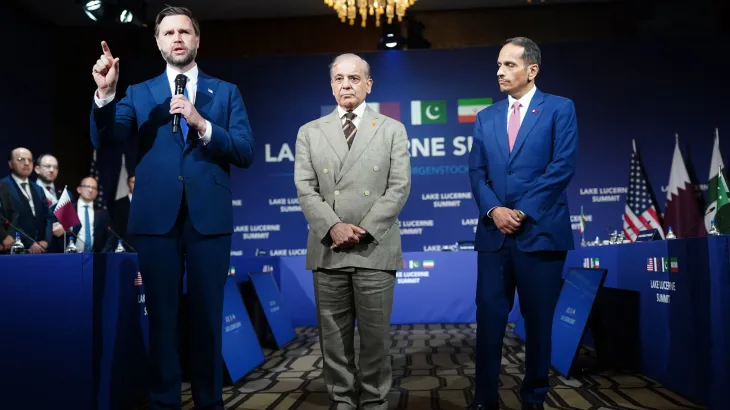
Bürgenstock, Switzerland, June 22: The United States and Iran have agreed on a 60-day roadmap aimed at reaching a comprehensive agreement, following the first day of high-level negotiations mediated by Pakistan and Qatar in Switzerland.
In a joint statement, the mediators described the talks as making “encouraging progress” and announced the establishment of a mechanism for continued technical negotiations. The parties also agreed to create a “de-confliction cell” intended to facilitate the end of military operations in Lebanon and reduce the risk of further regional escalation.
A high-level committee has been formed to oversee the mediation process, with chief negotiators expected to report regularly on developments. Working groups focusing on Iran’s nuclear programme, sanctions relief, and regional security issues will begin technical discussions immediately.
Iranian Foreign Minister Abbas Araghchi hailed the outcome as “major progress,” saying Tehran had secured several key demands. According to Araghchi, the United States has agreed to waive restrictions on Iranian oil and petrochemical exports, lift aspects of the blockade affecting Iran, release portions of Iran’s frozen assets, and support a major reconstruction and development initiative for the country.
Iran had previously insisted that implementation of specific provisions in the Memorandum of Understanding (MoU) was a prerequisite for launching technical negotiations. Iranian officials now say those conditions have been met, allowing talks to move forward throughout the week.
However, tensions remain. Iranian Foreign Ministry spokesman Esmaeil Baghaei revealed that Tehran refused to continue direct quadrilateral discussions with the United States after President Donald Trump issued a warning that Washington would respond forcefully if Iran failed to restrain its regional allies, particularly Hezbollah in Lebanon. Following the remarks, mediators from Pakistan and Qatar continued discussions separately with both delegations.
Meanwhile, Israeli Prime Minister Benjamin Netanyahu reiterated that Israel would maintain its military presence in a security zone in southern Lebanon for as long as it deemed necessary. In response, IRGC Quds Force commander Esmail Qaani warned Israel to withdraw from southern Lebanon or risk a repeat of its 2000 withdrawal, which he described as a defeat.
Despite the diplomatic breakthrough, analysts caution that significant challenges remain. Experts note that resolving disputes over Iran’s nuclear programme, sanctions relief, and the release of frozen assets will require complex technical negotiations that could extend beyond the 60-day timeline outlined in the interim agreement.
The talks at Switzerland’s Bürgenstock Resort are being closely watched internationally, with hopes that they could help reduce tensions across the Middle East and pave the way for a broader regional settlement.