ibn sultan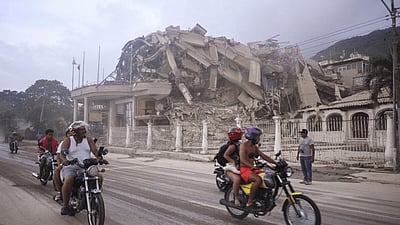
Caracas, June 25: At least 32 people have been killed and around 700 injured after two powerful earthquakes struck Venezuela’s capital, Caracas, within seconds of each other, causing widespread destruction, the collapse of multiple buildings, and triggering a nationwide state of emergency.
According to Venezuelan authorities, the first earthquake measured 7.2 in magnitude, followed moments later by a stronger 7.5-magnitude tremor. The quakes struck at approximately 6:04 p.m. local time, shaking large parts of the country and sending terrified residents rushing into the streets.
Acting President Delcy Rodríguez declared a state of emergency shortly after the disaster and expressed condolences to families who lost loved ones. She later confirmed that at least 32 people had died and hundreds more were injured, warning that the casualty toll could rise as rescue operations continue across affected areas.
Emergency responders, military personnel, and volunteers have been deployed to search through the rubble of collapsed buildings in Caracas and surrounding regions. Rescue teams reported hearing people trapped beneath debris, raising hopes that additional survivors may still be found.
The municipality of Baruta reported at least three fatalities after two residential buildings collapsed. In neighboring Chacao, authorities confirmed that multiple structures had either collapsed completely or suffered severe structural damage. More than 500 emergency workers have been mobilized in the district alone.
Images emerging from the capital show scenes of devastation, with damaged apartment complexes, cracked roads, fallen utility poles, and widespread power outages. Thousands of residents spent the night outdoors, fearing aftershocks and further building collapses.
“We thought we were going to die,” one Caracas resident told local media after surviving the quake. Many families remain separated as communication networks continue to experience disruptions.
The country’s main international gateway, Maiquetía International Airport, has been closed following significant structural damage. Videos circulating online showed passengers fleeing terminals as parts of ceilings collapsed and dust filled airport corridors during the tremors.
Authorities have also suspended metro and train services throughout the capital and canceled classes for the remainder of the week while engineers assess the safety of public infrastructure.
According to the United States Geological Survey (USGS), the earthquakes occurred near the boundary between the Caribbean and South American tectonic plates. The agency said the larger quake resulted from shallow strike-slip faulting, a type of geological movement capable of generating intense ground shaking and extensive damage.
The USGS warned that the disaster is likely to be widespread and estimated a significant risk of further casualties. Experts also cautioned that strong aftershocks remain possible in the coming days.
Since the initial earthquakes, more than 20 aftershocks have been recorded, according to reports citing the Venezuelan presidency. The northern coastal regions, including La Guaira, Aragua, Carabobo, and Falcón, have been among the hardest-hit areas.
International leaders have expressed solidarity with Venezuela and offered assistance. U.S. President Donald Trump described the earthquakes as a tragedy that had caused a “devastating number of deaths” and said American agencies were preparing to provide emergency aid, search-and-rescue teams, and humanitarian support.
Several Latin American nations, including Brazil, Mexico, Ecuador, and El Salvador, have also pledged assistance. El Salvador announced that it has prepared emergency supplies and rescue personnel ready for deployment to Caracas if requested.
The earthquakes struck during a national holiday when many Venezuelans were at home, potentially increasing the number of casualties. Authorities continue to assess the full extent of the destruction, while rescue operations remain underway across the capital.
Officials have urged residents to avoid damaged buildings, remain alert for aftershocks, and follow emergency instructions issued by local authorities.
As dawn breaks over Caracas, rescue teams continue their race against time to locate survivors trapped beneath collapsed structures, while the nation grapples with one of the most devastating natural disasters in its recent history.